Family
Tarbiyah at home: nurturing children with intention
Children learn faith less from what we tell them and more from what they see us do, every day.
Tarbiyah means holistic nurturing: faith, character, habits and emotions growing together. It is a lifelong process, and for most children it begins at home.
“Each of you is a shepherd, and each of you is responsible for his flock.”
Narrated by Abdullah ibn Umar. Sahih al-Bukhari 893; Sahih Muslim 1829
The Qur'an addresses believers directly: “O you who have believed, protect yourselves and your families from a Fire whose fuel is people and stones” (At-Tahrim 66:6). Notice that it begins with yourselves. Our own example comes first.
Start from the fitrah
The Prophet ﷺ taught that every child is born upon the fitrah, the natural disposition towards recognising Allah (Sahih al-Bukhari 1385; Sahih Muslim 2658). Tarbiyah is less about filling an empty vessel and more about protecting and nurturing something already there.
Four principles for faith at home
- Example before instruction. Children notice whether we pray on time, how we speak about others and how we handle anger.
- Warmth before correction. Children accept guidance from people they feel close to. Time together builds the relationship that correction depends on.
- Routines over lectures. Praying one salah together each day teaches more than a long talk about prayer.
- Age-appropriate expectations. Encourage, celebrate small steps and increase responsibility gradually as children grow.
Teenagers need conversation
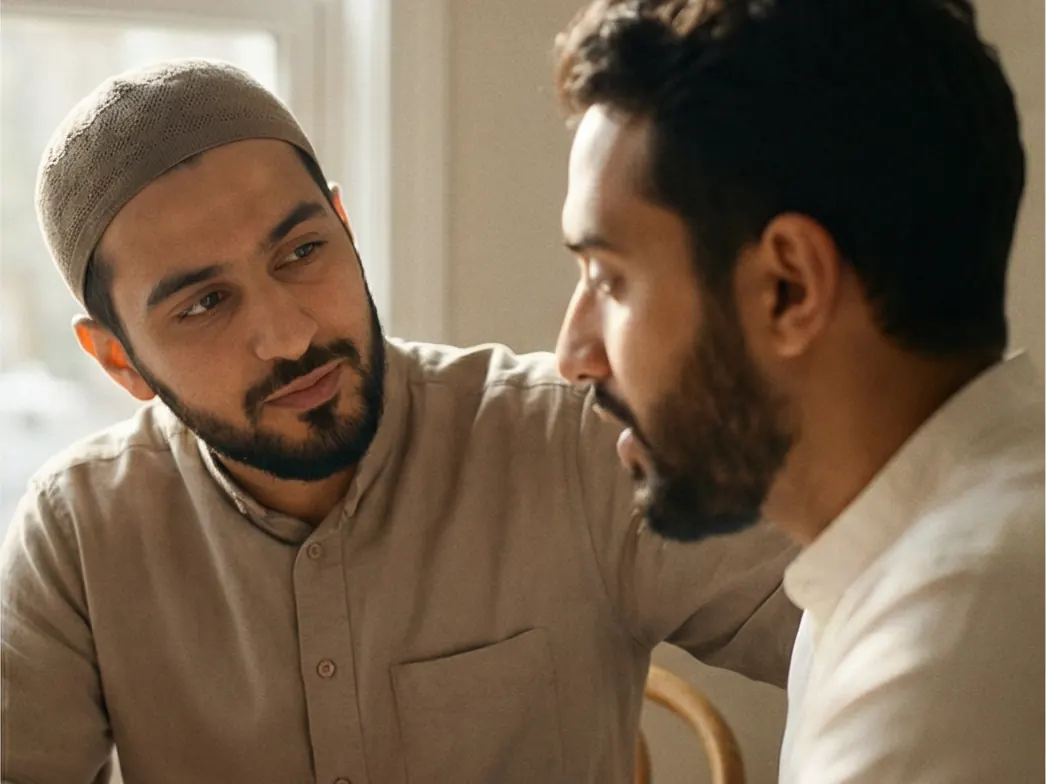
As children grow, tarbiyah shifts from instruction to dialogue. Ask what they think. Let them voice doubts without fear. A teenager who can bring hard questions home is far better protected than one who learns to stay silent.
Make du'a for them, and with them
“Our Lord, grant us from among our wives and offspring comfort to our eyes and make us an example for the righteous” (Al-Furqan 25:74). Let your children hear you make this du'a for them.
Pick one salah to pray together as a family every day this week, and keep it short and warm.
- Sahih al-Bukhari 893; Sahih Muslim 1829, narrated by Abdullah ibn Umar.
- Sahih al-Bukhari 1385; Sahih Muslim 2658, narrated by Abu Hurayrah.
- Qur'an, At-Tahrim 66:6 and Al-Furqan 25:74 (Saheeh International).
Sincere Naseeha mentoring and content offer guidance and support. They are not a substitute for professional counselling, therapy, medical care or emergency services.